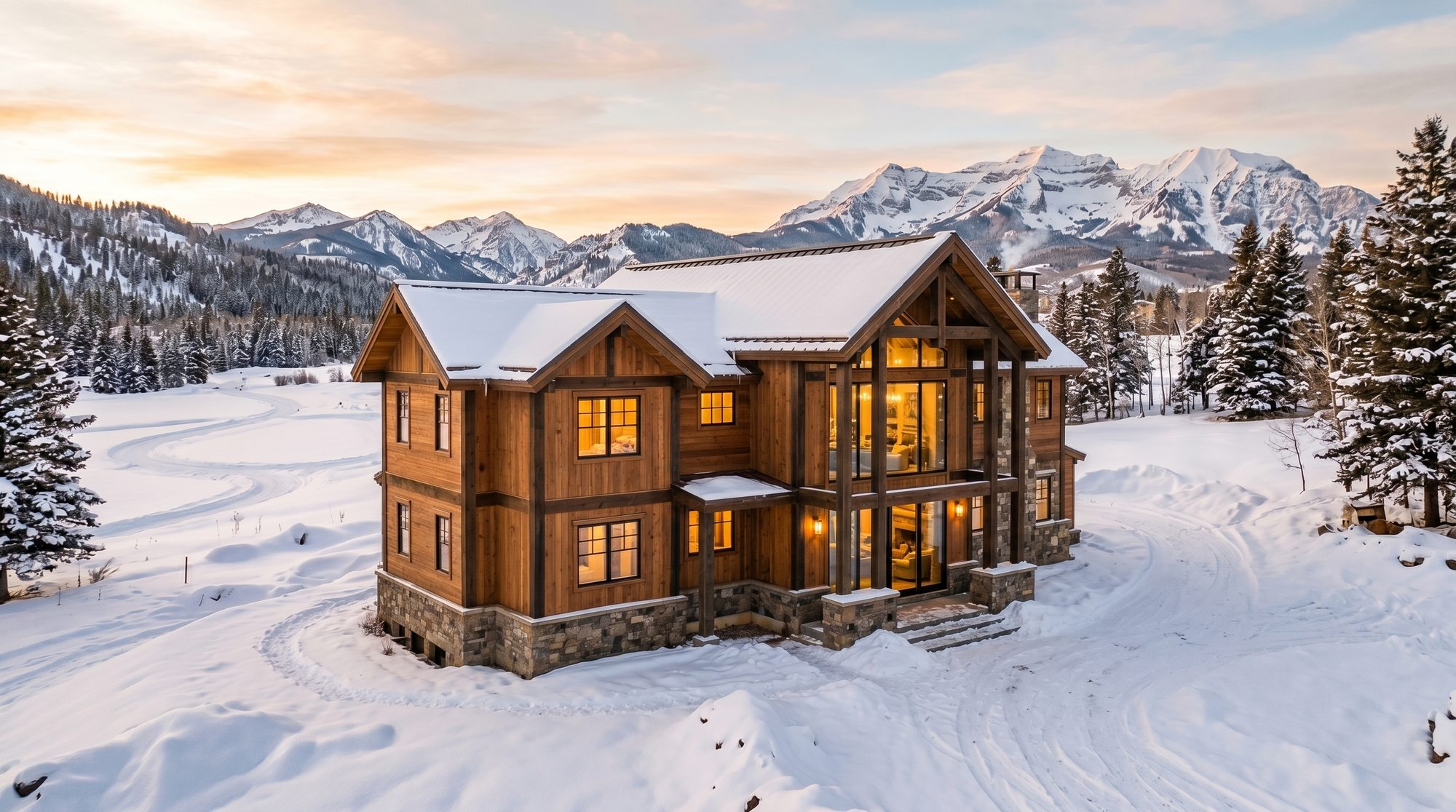
Different towns, same mountain-envelope problem
Homes in Midway, Charleston, and Kamas see the same core issue as Heber: long heating seasons and lots of places for air to leak. The exact building style changes, but the insulation priority is usually the same: seal the envelope before paying for more heat.
Older cabins, newer custom builds, detached shops, and additions can all benefit from a focused spray foam plan.
Midway and Charleston
Midway and Charleston homes often mix older framing, remodels, and high-end new construction. Retrofits should start with attic access, rim joists, crawl spaces, and additions where comfort complaints are strongest.
For new builds, the best time to plan foam is before mechanical rough-in is complete, so ventilation and combustion-air details are not afterthoughts.
Kamas and east-side properties
Kamas-area homes and shops may have larger unconditioned spaces, bigger temperature swings, and more detached structures. Closed-cell foam is often worth discussing for shops, garage ceilings, rim joists, and exposed areas that need both air sealing and durability.
How travel and scope affect the quote
A small patch job far from town can be less efficient than a full attic or crawl-space project. A clear estimate should show the work area, foam type, thickness, prep, and any travel or minimum-job charge upfront.
Midway's older homes and remodel work
Midway has a housing mix that makes insulation work more interesting than a subdivision does. Alongside newer construction there is a real stock of older homes, some dating to the town's Swiss-settlement era, and those buildings were not framed with modern cavity depths or air sealing in mind.
What that means practically: on an older Midway house, the biggest available wins are usually not the walls. They are the attic, the crawl space or basement rim joists, and whatever gets opened up during a remodel. Chasing wall insulation in a finished historic home is an expensive way to get a modest return, and it can create moisture problems in an assembly that was never designed to be sealed. A careful installer will look at the whole building rather than quoting foam by the square foot.
Remodels are the real opportunity. If you are already opening walls, adding a dormer, or finishing a basement, that is the moment when insulation is cheap to improve, because the access is free. It is worth scoping insulation into a remodel conversation early rather than treating it as an afterthought once the drywall is ordered. The Midway city offices can tell you what your project needs by way of permitting.
Kamas Valley shops, barns, and outbuildings
Kamas has a different profile again. It is a ranching valley at the mouth of the Uintas, and a large share of the insulation work out there is not the house at all — it is the shop, the barn, the detached garage, or the metal building someone wants to heat through the winter without an enormous propane bill.
Metal buildings in particular are a natural fit for closed-cell foam. Sprayed directly to the underside of the roof panels and the walls, it does two things at once: it adds insulation value, and it stops the condensation that otherwise drips off cold steel every time the shop is heated. Anyone who has run a heater in an uninsulated metal building through a Kamas January knows exactly what that dripping looks like.
Sizing matters on these buildings. A shop that is heated occasionally to keep equipment above freezing is a very different specification from one that is heated to work in comfortably all winter, and it is worth being clear about which you want before anyone quotes. Our closed-cell foam guide covers why that product tends to dominate outbuilding work.
Francis, Woodland, Oakley, and the outlying properties
Past Kamas, the smaller communities along the Highway 35 and Weber Canyon corridors — Francis, Woodland, Oakley, and the properties scattered between them — share a common set of conditions. They sit at elevation, they get more snow than the valley floor, they often run on propane rather than natural gas, and many of the buildings are cabins, second homes, or additions built in stages over the years.
That stage-built history is the thing to know. A house that grew by addition tends to have discontinuities in its insulation exactly where one section meets another, and those junctions are where cold air gets in. A good assessment out here spends as much time on those seams — the knee walls, the cantilevers, the roofline where an addition ties into the original structure — as it does on the obvious attic and crawl space.
Cabins and part-time residences carry an extra consideration: freeze protection matters more when nobody is there to notice a problem. Insulating and air sealing the spaces where plumbing runs is worth prioritizing even when the rest of the building can wait.
Scheduling around a mountain winter
Timing is a legitimate factor in this part of the county. Spray foam application is temperature sensitive, and the surface being sprayed has to be within the manufacturer's range for the foam to adhere and cure correctly. In an unheated Kamas shop in January, that can mean bringing in temporary heat before work starts, which affects both the schedule and the cost.
Access is the other seasonal variable. A steep or unplowed driveway, a property at the end of a long private road, or deep snow around a crawl space hatch all make a winter job slower than the same job in September. None of this makes winter work impossible — plenty of it happens — but if your project is flexible, shoulder seasons tend to be easier to schedule and simpler to execute.
What actually drives your quote out here
We do not publish prices. Beyond the usual factors covered in the main Heber spray foam guide, these are the ones that matter more in the outlying towns:
- Drive time and trip count. A job that can be completed in one visit costs less to service than one requiring several.
- Building type. A metal shop, a log structure, and a conventionally framed house are three different jobs.
- Temporary heat if the work is happening cold.
- Site access in snow, including whether a rig can get close to the building.
- Staged construction, which means more seams to find and seal than a single-build house.
If you are in Heber or Charleston proper, the attic guide and the crawl space guide cover the two areas that return the most on most valley homes.
Common questions
Do you quote cabins and second homes?
Yes, quote requests can cover cabins, second homes, shops, garages, and additions across the Wasatch Back.
Is Kamas too far?
Not for the right project. Scope and scheduling determine whether a job makes sense.
Can foam be used in detached shops?
Often, yes. Closed-cell foam is commonly considered for shops because it air-seals and adds durable R-value.
Do you cover Francis, Woodland, and Oakley too?
Yes. Those outlying communities are within the area this site serves, along with Midway, Charleston, Kamas, and Heber proper. Drive time can affect scheduling and the quote, so it is worth mentioning your exact location when you first call.
Can you insulate a metal shop or pole barn?
Yes, and it is common work in the Kamas Valley. Closed-cell foam sprayed to the underside of the panels handles both insulation and the condensation that forms on cold steel when a building is heated. Be clear about whether you want the building merely kept above freezing or genuinely comfortable to work in, since that changes the specification.
My cabin is only used on weekends. Is insulation worth it?
Often yes, though the reasoning is different. For a part-time property the priority is usually freeze protection and reducing the cost of holding the building at a safe temperature while nobody is there, rather than day-to-day comfort. Insulating the areas where plumbing runs tends to be the highest-value work.
Is it a problem to have foam sprayed in the winter?
Not inherently, but the surface temperature has to be within the product's range. In an unheated building that may mean temporary heat before spraying. It is worth asking any installer quoting a winter job how they intend to handle substrate temperature.
Will I be charged more for being outside Heber City?
Travel is a real cost, so a distant property may quote higher than an identical job in town, particularly if it needs multiple visits. Reputable installers state this openly rather than burying it. Ask how many trips the job is expected to take.