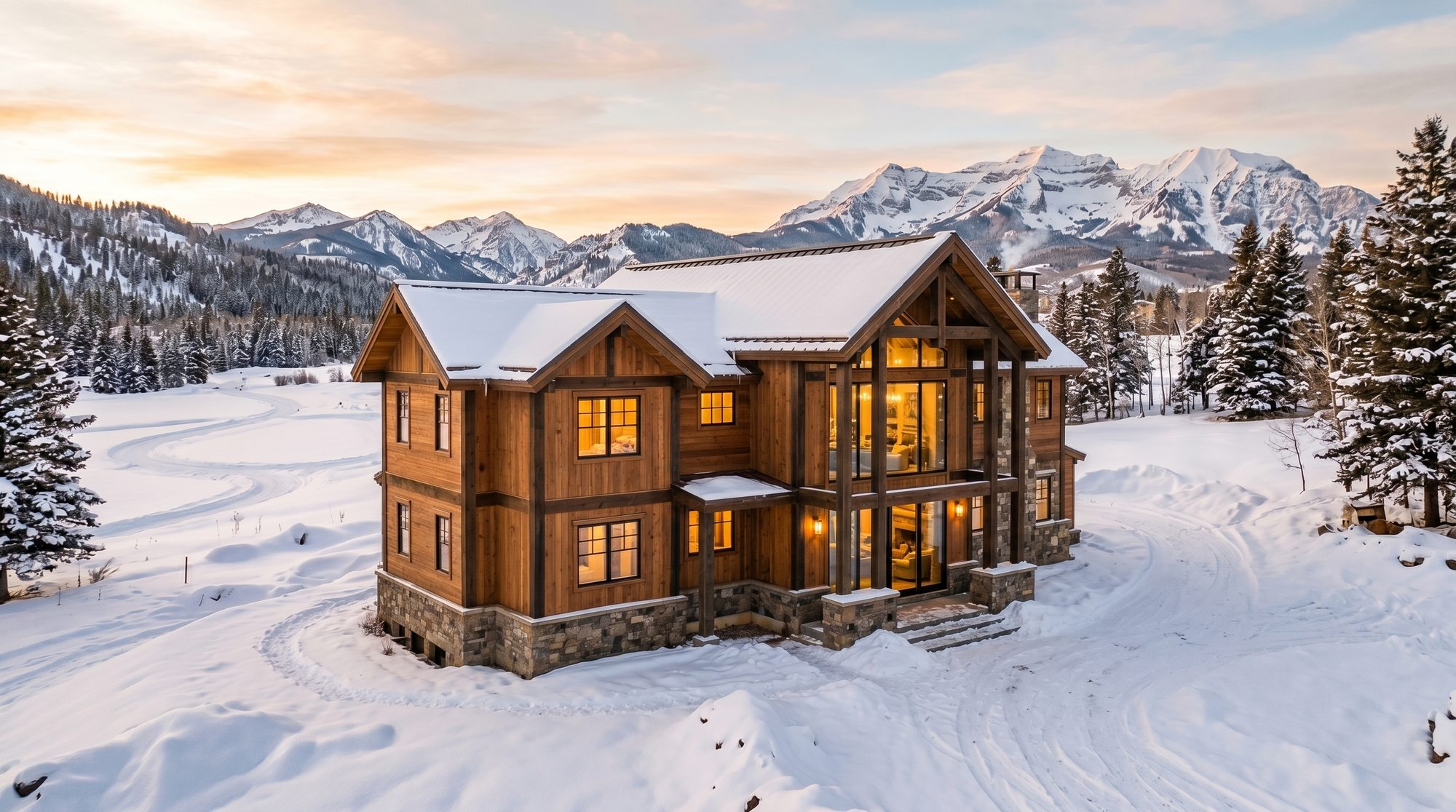
More insulation is not always the first step
When a Heber home feels cold upstairs, the instinct is to add more insulation. Sometimes that helps. But if warm indoor air is leaking through ceiling gaps, can lights, bath fans, attic hatches, and top plates, new insulation only hides the leak.
The better sequence is air seal first, then insulate. Spray foam can do both in specific areas, but the attic still needs a clear plan for moisture, ventilation, and access.
Attic floor or roofline?
Most vented attics are insulated at the attic floor, keeping the attic outside the conditioned space. In that setup, air sealing the ceiling plane is the critical step.
A roofline foam assembly moves the thermal boundary to the roof deck. That can make sense when HVAC equipment or ducts run through the attic, or when a builder wants an unvented conditioned attic. It is more involved and should be designed carefully.
Heber-specific attic issues
Cold winters make air leaks obvious. Warm indoor air rises, escapes into the attic, and can carry moisture with it. If that moisture meets cold roof decking, it can contribute to frost, staining, or sheathing problems.
That is why an attic quote should include more than inches of insulation. Ask how the installer checks air leaks, bath fan venting, existing moisture, and ventilation before recommending foam.
What a good attic estimate includes
- Existing insulation depth and condition.
- Air-leak targets around penetrations and attic access.
- Ventilation plan for a vented attic, or the assembly plan for an unvented roofline.
- Foam type and thickness by area.
- Cleanup and access notes.
Ice dams: what insulation fixes and what it does not
Ice dams are the complaint we hear most from Heber and Midway homeowners, usually described as "icicles the size of my arm" hanging off the eaves by January. The mechanism is worth understanding, because it determines whether insulation is actually the right purchase.
Snow sits on the roof. Heat escaping from the house warms the roof deck from underneath. That melts the snow near the top of the roof, the water runs down to the cold overhang where there is no heated space below, and it refreezes into a ridge of ice. Water then backs up behind that ridge and can work its way under the shingles.
So the honest answer is that heat loss is the part you can control, and air sealing plus insulation is how you control it. But roof geometry, the amount of sun a slope gets, complex valleys, skylights, and simply how much snow fell that week all play a role too. A house can be well insulated and still form some ice in a heavy winter. Any contractor who guarantees ice dams will disappear forever is overselling. What good work reliably does is reduce the heat that drives the cycle.
The air-sealing checklist for a Heber attic
Because air sealing comes before insulation, it is worth knowing exactly where the leaks usually are. In a typical valley home, warm air escapes through a predictable set of holes:
- Recessed can lights — older non-airtight housings are among the worst offenders.
- The attic hatch or pull-down stair — frequently uninsulated and unweatherstripped, and it is a large opening.
- Top plates where interior walls meet the attic, plus the gaps around every wire and pipe penetration.
- Plumbing vent stacks and flue chases, which can be sizable open shafts straight down into the house.
- Bath and kitchen exhaust fans, especially any that dump into the attic instead of all the way outside. That is a moisture problem as much as an energy one, and in a cold attic it shows up as frost on the underside of the roof deck.
- Dropped soffits and chases above cabinets or tubs, which are often open to the attic from the day the house was framed.
The bath fan item deserves emphasis. Venting a fan into the attic in a climate like this is one of the fastest ways to create sheathing damage, and it is not rare. If your installer does not check it, ask.
Ventilation and baffles in a vented attic
If you are keeping a conventional vented attic and insulating the floor, the ventilation path has to stay open. That means baffles at the eaves so blown or sprayed insulation does not smother the soffit vents, and a balanced intake-to-exhaust arrangement so the attic actually flushes air rather than short-circuiting.
This is the detail most often missed on retrofit jobs. A crew adds a foot of insulation, buries the soffit vents, and the attic loses the airflow that was keeping the deck cold and dry. The house is warmer and the roof is worse off. ENERGY STAR's sealing and insulating guidance walks through the sequence in more detail if you want to read up before the estimate.
What actually drives your attic quote
We do not list prices here, because attic work varies too much from house to house for a number to mean anything. These are the variables that move an estimate:
- Removal. Whether the existing insulation stays or has to be vacuumed out — the single biggest swing factor on many retrofits.
- Air-sealing scope. How many penetrations, chases, and can lights need attention.
- Assembly choice. Insulating the attic floor is far less involved than converting to a foamed, unvented roofline.
- Access and headroom. A steep, low, or truss-packed attic is slow to work in.
- Repairs. Rerouting a bath fan, fixing a roof leak, or replacing damaged sheathing before anything gets covered.
- Square footage and target depth. Straightforward, and the part most quotes lead with.
If you are deciding between products for the roofline, our closed-cell foam guide covers the moisture-control side, and the main Heber spray foam guide explains how a full install runs.
Common questions
Should old attic insulation be removed?
Only when it is damaged, contaminated, wet, or blocking a proper air-sealing plan. Clean existing insulation can sometimes stay.
Can spray foam help with ice dams?
It can reduce the air leakage that contributes to uneven roof temperatures, but roof design, ventilation, and snow conditions also matter.
Is attic spray foam messy?
A professional job should isolate the work area, protect access paths, and leave the attic serviceable.
How much insulation should a Heber attic have?
Wasatch County sits in one of Utah's colder climate zones, so attic targets here are at the higher end of what the national code calls for, and Utah applies its own amendments. Rather than trusting a number from a website, confirm the current requirement with the county before you commit to a depth.
My bath fan vents into the attic. Is that a problem?
Yes, and it is worth fixing before any insulation work. That fan is pushing warm, humid air into a cold space every time someone showers. In a Heber winter that moisture can condense or frost on the underside of the roof deck. It should be ducted all the way to the outside.
Will insulating the attic make my upstairs bedrooms cooler in summer?
Usually it helps, since a lot of summer heat gain comes through the ceiling. How much difference you notice depends on your windows, shading, and how your cooling system is set up, so treat it as an improvement rather than a fix for a room that has always been unbearable.
Do I have to remove the old insulation?
Not always. Clean, dry, undamaged insulation can often stay and be topped up. It comes out when it is wet, contaminated by rodents, compacted to the point of uselessness, or physically in the way of the air sealing that needs to happen underneath it.
Is an unvented foamed roofline better than a vented attic?
Neither is universally better. A foamed roofline makes sense when ducts or HVAC equipment live in the attic, because it brings them inside the thermal envelope. A vented attic with a well-sealed ceiling is simpler and usually less expensive. The wrong choice is a half-converted attic that is neither properly vented nor properly sealed.